How to sear
Dry food, hot metal, space, and contact time — browning, not sealed juices.
Open techniqueTechnique first
Four moves recipes skip: sear, emulsify, heat, and proof. The science is in plain English. Bring the recipe you already have.
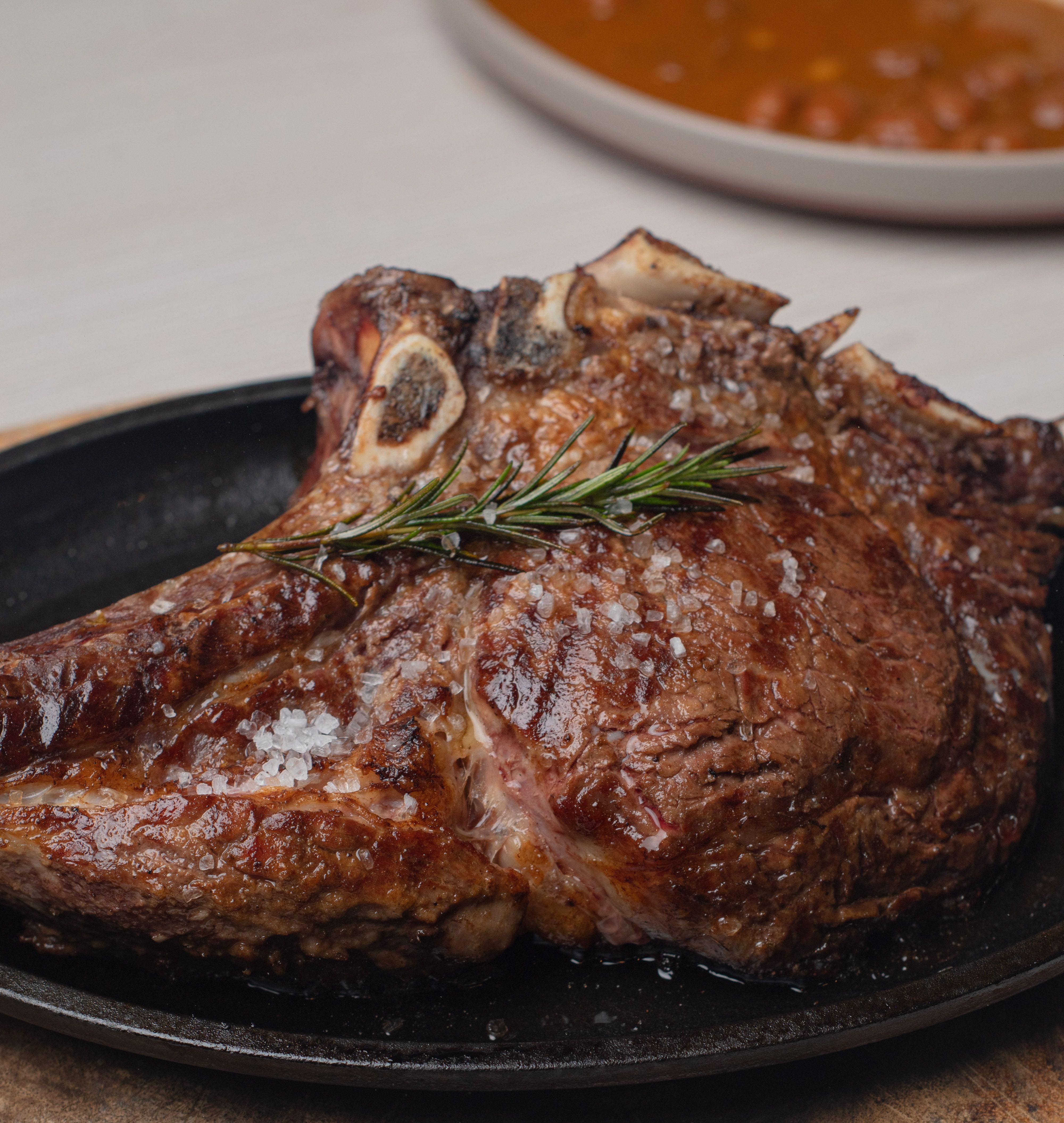
Photo: Pexels, ribeye crust in a skillet. https://www.pexels.com/photo/juicy-grilled-ribeye-steak-with-rosemary-garnish-37121070/
The moves recipes assume — learn the move once.
Dry food, hot metal, space, and contact time — browning, not sealed juices.
Open techniqueOil and water stay mixed when an emulsifier and shear hold the droplets apart.
Open techniqueThe knob only helps if you can read what the food is doing.
Open techniqueFinal rise after shaping — yeast makes gas; gluten holds the bubbles. Time and temperature are ingredients.
Open techniqueSear, shortened. The full technique keeps this order — including the misses.
01
How do you sear? Dry the food, get the metal hot, leave space, and wait — crust is browning, not a juice seal.
02
ELI5
Water on the surface has to leave before browning can dominate. Wet food steams. Dry, hot metal + dry surface → browning chemistry. Fat helps heat transfer and carries aroma; it isn’t magic armor.
03
04